

If you've been eyeing a lab diamond trilogy rings Super Saturday sale, you're not alone. The three-stone look is hard to resist, but it's easy to feel lost once you start comparing. Which setting? Which shape? And does lab-grown really look the same? The right choice is usually simpler than the catalogue makes it seem.
Quick Summary
- A trilogy ring uses three stones, usually a larger centre diamond with two smaller side stones.
- The setting, whether claw, bezel or pavé, changes the overall feel more than most people expect.
- Lab-grown diamond trilogy rings are chemically and optically identical to mined diamonds, often at a lower price.
- Check the certificate and the 4Cs before comparing prices, not after.
- Compare the final cost, returns policy, and warranty before you commit to a lab diamond engagement ring design.
Lab Diamond Trilogy Rings Super Saturday Sale: Styles Worth Exploring
Sales like this tend to bring out the classic designs, although there is more variation than the name implies. Some trilogy ring settings and styles are subtle and discreet, while others include larger side stones or a halo-style detail. The best one is generally the one you will still reach for every day. If possible, try on a few or take a good look at images from many angles. A ring that appears great on a screen can feel completely different on your hand.
How Three-Stone Settings Influence the Look of Trilogy Rings?
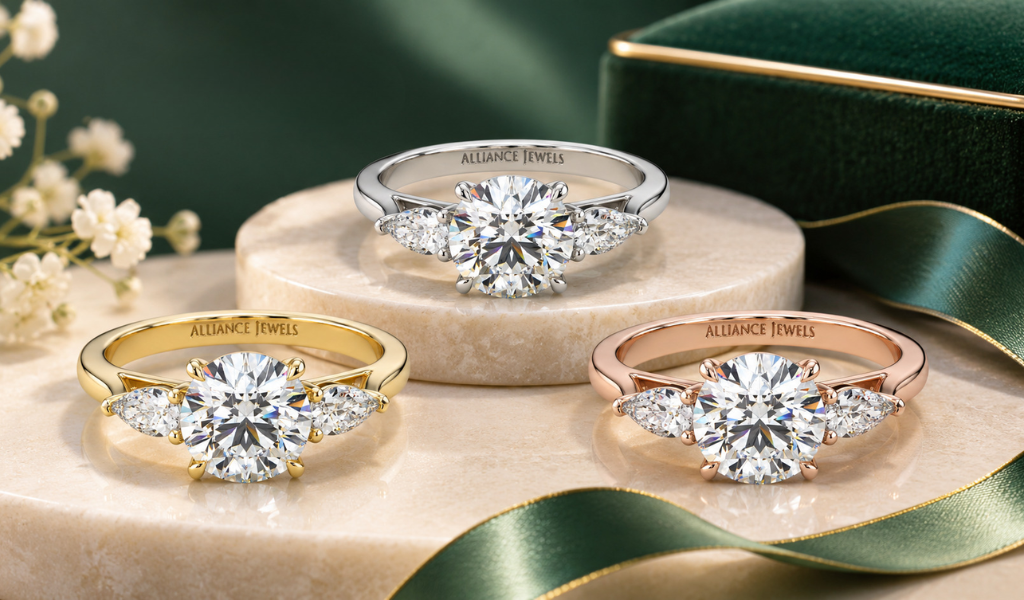
It is the place where a trilogy ring character is from. Claw settings feel airy and let light pass through the stones. Bezel settings hold each stone in a rim of metal, which feels a touch more modern and more substantial. Pavé-set side stones add brilliance without detracting from the center.
Metal colour is also important. Yellow gold is warm, white gold and platinum are crisp and chilly, and rose gold is somewhere in between. Pick the metal you wear most often, so the ring doesn’t clash with your regular jewellery.
Choosing Diamond Shapes and Cuts for a Balanced Three-Stone Design
The safe, common choice for the center stone is the round brilliant. Oval and pear shapes can make fingers look longer; princess cuts have a sharper, more geometric style. You can combine forms, but matching the side stones to each other usually appears more balanced.
If the cut is good, the shape isn’t as important. A well-cut stone reflects light evenly so it looks bright even when tiny. Ask for the cut grade when it is given, and don’t assume any stone of the same shape will dazzle quite the same.
Lab-Grown Diamonds: Quality, Certification and Value
Lab-grown diamonds are real diamonds, grown in controlled conditions rather than formed underground. They share the same crystal structure and physical properties as mined stones. The difference is mostly in origin and cost.
Certification is worth checking. A reputable grading report from a recognised laboratory confirms the carat weight, colour, clarity, and cut. Ask for that report with any lab diamond engagement ring design you're considering, and check that the listing matches the certificate exactly. If the details don't line up, ask before you buy.

What to Compare Before Buying a Trilogy Ring on Sale?
A discount is appealing, but the sale price only tells part of the story. Add up the total, including delivery, insurance, and any resizing fees. Then look at the returns policy and how long the warranty lasts. Some retailers offer lifetime care for the setting, which can be worth a lot over the years.
Finally, compare the stone specifications side by side. Two rings can look similar online while one has a noticeably better cut or colour grade. Take your time, and don't feel rushed just because a sale is ending. A good ring will still be good next week.
Conclusion
Finding the right trilogy ring is about how it feels to wear rather than simply the sale price. Choose a setting you love, a shape that suits your hand and a diamond certification you trust. At Alliance Jewels, you can explore different trilogy ring designs and compare styles to find one that matches your taste and budget. Take your time with the decision, and don't hesitate to sleep on it if you're still unsure. The right ring is worth choosing carefully.
FAQs on Lab Diamond Trilogy Rings
What is a trilogy ring?
A trilogy ring has three stones, usually a larger centre diamond flanked by two smaller ones. The design looks balanced and works well for everyday wear.
Are lab-grown diamonds real diamonds?
Yes. They have the same chemical composition, crystal structure, and physical properties as mined diamonds. They differ mainly in origin and price.
Which setting suits a three-stone ring best?
It depends on your lifestyle. Claw settings feel light and airy, while bezel settings offer more protection for the stones, which can suit people who wear rings every day.
What should I check on a certificate?
Look for the carat weight, colour, clarity, and cut grade, and make sure they match the product listing. The laboratory name should also be clearly stated.
How can I tell if a ring offers good value?
Compare the total cost, including delivery, warranty, and returns, with other retailers. A lower headline price doesn't always mean better value.